


Why Do Brits Use Electric Kettles Instead of Gas?
Simple Answer: Almost all British households use electric kettles instead of gas ones to make tea because they’re faster, more convenient, safer, and offer extra temperature-control settings. A 3kW electric kettle can boil 1 litre of water in just 2-3 minutes, and it turns off automatically, which makes it really safe. It’s a simple and effective appliance to use whenever they fancy a cuppa.
Electric Kettles are staples in a British household, and many Americans are often confused by them. They keep asking questions like “Why Do British People Prefer Electric Kettles?” The stovetops and electric kettles do the same thing, but we still prefer the electric ones. Keep reading if you are curious and want to find out why.
Why is the electric kettle so popular in British kitchens, compared to the microwave or tap hot water?
British obsession with the electric kettle comes from several factors that combine to make it the most-used appliance in British Kitchens.
- Speed and convenience: A 230-volt power supply helps the electric kettle boil water in just a few minutes, making it much faster than traditional methods.
- Safety Features: Electric kettles have automatic switch-off features that prevent water from overheating. In contrast, microwaves can easily overheat water without boiling it.
- Habit: Hot tap water comes from a storage cylinder, where it is kept around 60 degrees Celsius, which is neither hot nor ideal for drinking. Traditionally, only cold taps had drinking water, so people got into the habit of boiling the cold water instead of using hot tap water.
- Temperature Control: Modern electric kettles have different temperature settings for different types of tea, which hot tap water cannot match.
- Culture: Tea is part of British culture, where “putting the kettle on” has become a ritual for socialization and taking breaks. Also, good tea needs freshly boiled water, not unevenly heated water from a microwave or stale, reheated water from the tap.
Electric kettle vs. gas: Easy comparison
| Basis of comparison | Electric kettle | Gas stove |
| Sources of energy | Electricity | LPG or piped gas |
| Water boiling speed | Usually faster | Depends on the heat and the pot. |
| Use | Easy operation by pressing the switch. | Gas has to be lit and utensils have to be kept. |
| Automatic shutdown | Available in most models | Usually not |
| Energy saving | Directly heats the water | A bit of warmth spreads all around |
| Expenditure | Depends on electricity rate and kettle capacity | Depends on gas prices and usage. |
| Safety | Models featuring auto cut-off and dry-boil protection are better | Caution is necessary due to open flames |
| Maintenance | Regular cleaning and descaling | Cleaning the burners and stove |
| Portability | Usable wherever there is a power outlet | Need gas connection |
| Best Use | Heating tea, coffee and small amounts of water | Preparing food and boiling lots of water |
Which is better? If your priority is quick boiling and easy use, an electric kettle may be a better choice. A gas stove, on the other hand, is useful for homes where gas is already available and requires both water heating and cooking.
Keep in mind that actual costs depend on local electricity and gas prices and your usage.
What is cheaper to cook with gas or electricity?
Boiling water on a gas hob will always be cheaper if we look only at electricity and gas prices. But electric kettles are far more energy efficient than gas hobs, which makes the boiling cost difference smaller. Still, boiling water on gas is cheaper than boiling it with electricity.
However, the difference is small and can disappear completely if you boil under 500ml of water in an electric kettle. This happens because gas has to heat the whole kettle first, which then heats the water. Whereas an electric kettle’s heating element directly heats the water. So when you are boiling a small quantity, an electric kettle becomes cheaper than a gas stove.
The main issue is that 8 in 10 Brits overfill their kettle, which, if we zoom out, wastes a lot of energy. So, boil only what you need to enjoy the benefits of an electric kettle alongside lower running costs.
Why don’t Americans have electric kettles in their kitchens?
You may have heard horror stories of Americans making tea in microwaves instead of electric kettles. This happens because most American households don’t have electric kettles. The simpler reason is that tea isn’t as popular in the States; most Americans prefer coffee.
As the 2026 National Coffee Data Trends (NCDT) Fall Report by the National Coffee Association says, 66% of adults consume coffee each day. This even surpasses bottled or tap water (64%) and exceeds tea (42%).
So, most households have their own dedicated drip coffee makers and single-serve pod machines. Another reason is the weak 110-120-volt (AC) electric power supply. This makes electric kettles in America slower than in the UK, so people don’t rely on them much. That means you don’t need to boil water separately.
However, Americans who do love tea have electric kettles; it’s just that they don’t come in the majority. The trend is also changing as the country sees a rise in multifunctional appliances. Mordor Intelligence’s forecast suggests the United States Electric Kettle market is expected to grow strongly.
Top 5 Best Energy-Efficient Electric Kettles in the UK
Boiling more water than you need is the biggest energy waste in most kitchens. The best energy-efficient electric kettles in the UK make it easy to avoid this problem. They offer features like a low minimum fill, a clear water gauge, fast boiling, and auto switch-off. We test multiple kettles and look at their minimum fill level, capacity, boil speed, temperature control, limescale filter, and UK users’ reviews to find the best electric kettles.
Philips Eco Conscious Edition 5000 Series Kettle
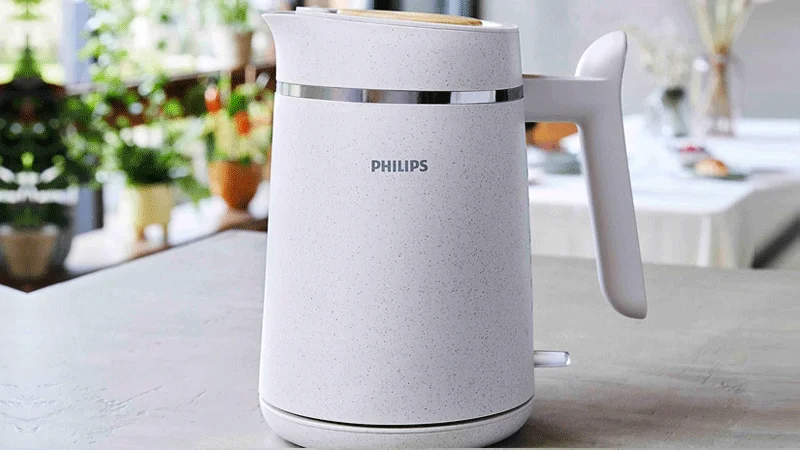
It is an eco-friendly electric kettle made of bio-based BPA free plastic to reduce its carbon footprint. It features a 3kW heating element, 1.7 L capacity, and automatic shut-off. This is great for those who value the responsibility of the environment without compromising the convenience of a fast, energy-saving kettle.

Ninja KT200 Precision Temperature Electric Kettle
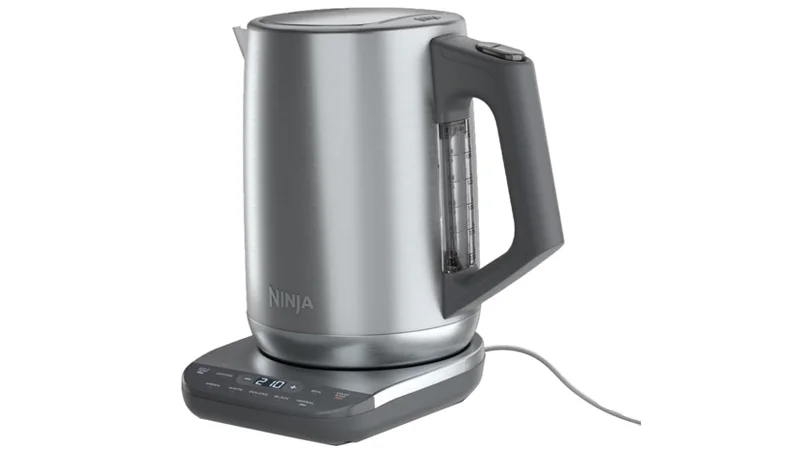
This stainless-steel kettle comes with pre-set temperature settings from 60°C to 100°C, which is great for people who consume multiple types of beverages. They can use 80°C for green tea and the usual temperature for their black tea. In addition to precise control, the Ninja KT200 has a hold-temperature feature that keeps the water warm so you don’t have to reheat it. But remember, it can be a little noisy, so choose it only if you don’t mind the sound.
Bosch Styline Kettle TWK8633GB
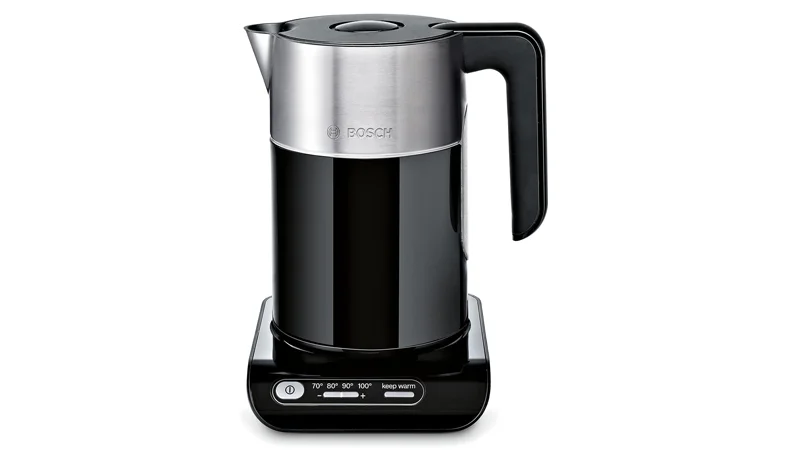
Bosch Styline’s stylish design, combined with reliable temperature control and hold features, makes it a popular choice for many people. It has a 70 to 100 degree temperature setting with a 3000W heating element. The cool-touch layer ensures the exterior stays safe to touch, even while the water inside is boiling.
KitchenAid Artisan Kettle 5KEK1522BCA
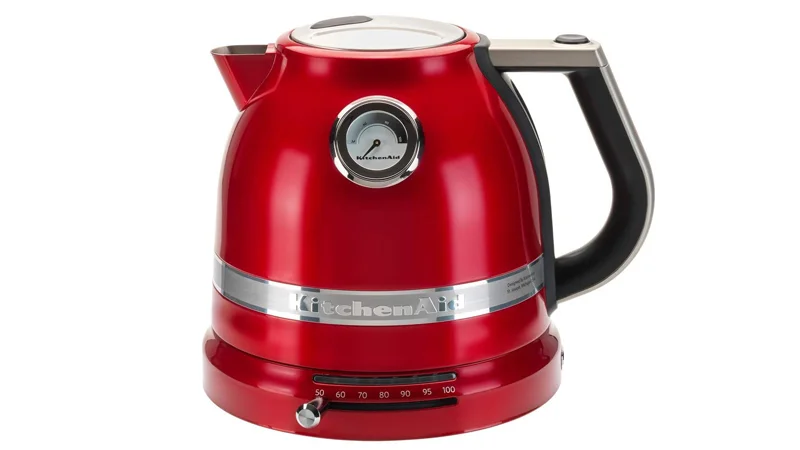
You’ll love it if you are a fan of iconic designs that keep all the useful functions. The KitchenAid Artisan comes with 50 to 100 temperature control, dual insulated walls, and temperature hold. All these features are combined with a premium design that can boil up to 1.5 litres of water at once.
Swan Alexa 1.5 litre Smart Kettle SK14650BLKN
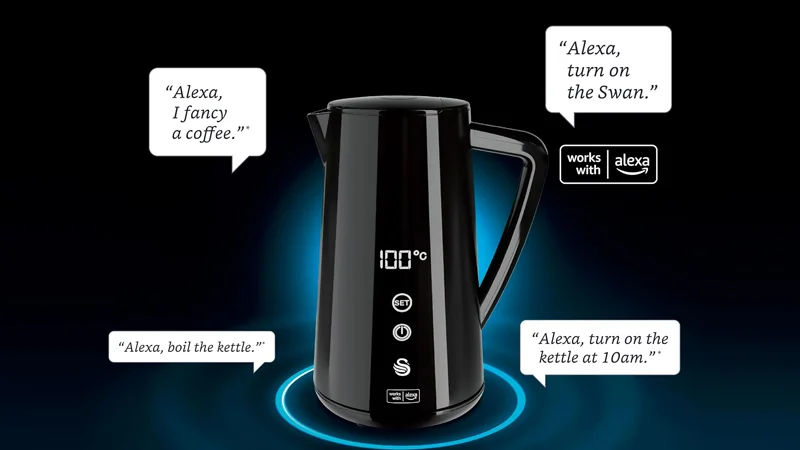
The main feature of the Swan Alexa is that you can control it with your voice or phone, so you can tell the kettle to boil water while you do something else. The stainless steel body holds 1.5 liters of water and offers different temperature settings to suit your needs. With rapid boil technology and a 3kW heating element, your cuppa will be ready in 2-3 minutes.
Disclaimer
The information provided by us on the best electric kettles is for general information and commercial purposes only. We try our best to provide accurate information about the products. This website contains external links from which we may earn commission, but it does not influence our review. We don’t take liability, sell kettles, or provide warranties, so make the final decision based on your own records.

Freelance Writer and Product Tester
Successfully works with creative teams by coordinating schedules and various creative inputs to craft unique stories and product review articles across multiple platforms. Bethany is responsible to tune with our technical team and write their real experiences about the various tested products.